Learn GD&T symbols, datums, feature control frames, MMC and bonus tolerance in a practical course.
Talk to our counsellor — choose the right course, batch time and mode.
Join at a CADD centre near you or online. You get your student login and ID card.
20 Hours of hands-on GD&T classes — in the classroom or live online.
Exercises in every class and a final project, checked by your trainer.
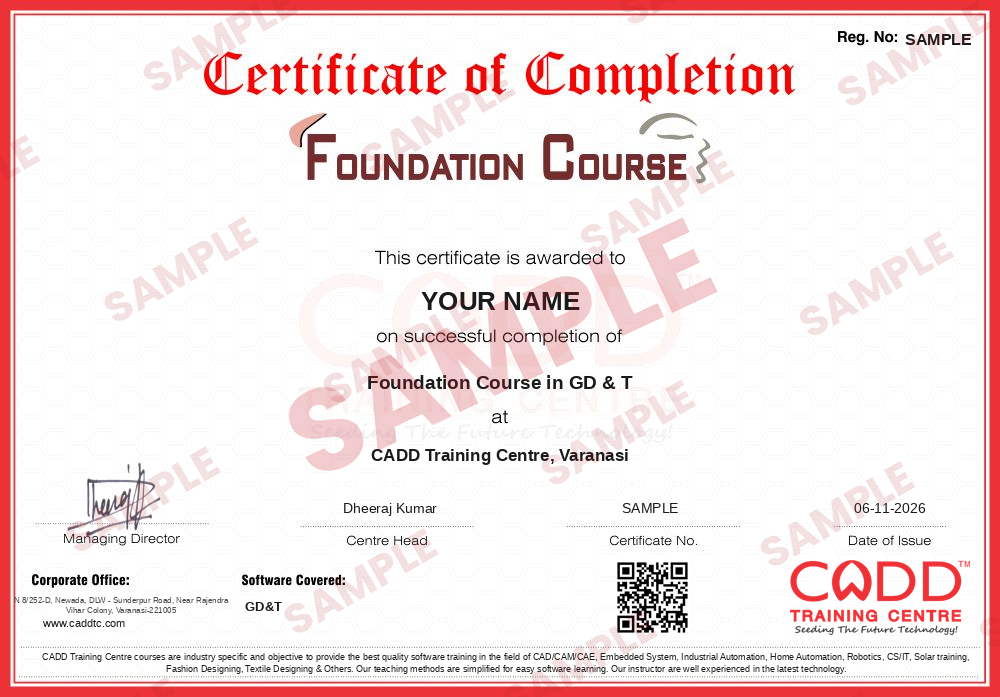
Finish the course and get your course-completion certificate and a digital completion badge with your name.

Take the certification exam: a theory test and a practical task — at the centre or online.
Pass the exam and get the certified certificate with your marksheet. Anyone can check it online with its QR code.
Your certified badge — add it to LinkedIn and share it anywhere; it opens its own verify page.

Make your CV in your student panel (Career → My CV) — your course, certificates and projects are added for you. Send it as a link with a preview picture, and apply to jobs and Hire Me requests from companies.
GD&T (Geometric Dimensioning and Tolerancing) is the symbolic language engineers place on drawings to state exactly how much a feature's form, orientation, location or runout may vary. Instead of relying only on plus/minus limits, a feature control frame ties each requirement to datums, so the designer, the machinist and the quality inspector all read the part the same way. Automotive, aerospace, machine-tool and precision component companies depend on it daily.
This 20-hour GD&T foundation course explains the system in a logical order. You start with the limits of conventional tolerancing and the envelope principle, learn every geometric characteristic symbol and how to read a feature control frame, and then build a datum reference frame with primary, secondary and tertiary datums. Form, orientation, profile, position and runout tolerances are covered with worked examples, including bonus tolerance and virtual condition under MMC and LMC. The last sessions link callouts to inspection with surface plates, CMM reports and functional gauges, using real industrial drawings. Training runs in CADD classrooms and as live online classes.
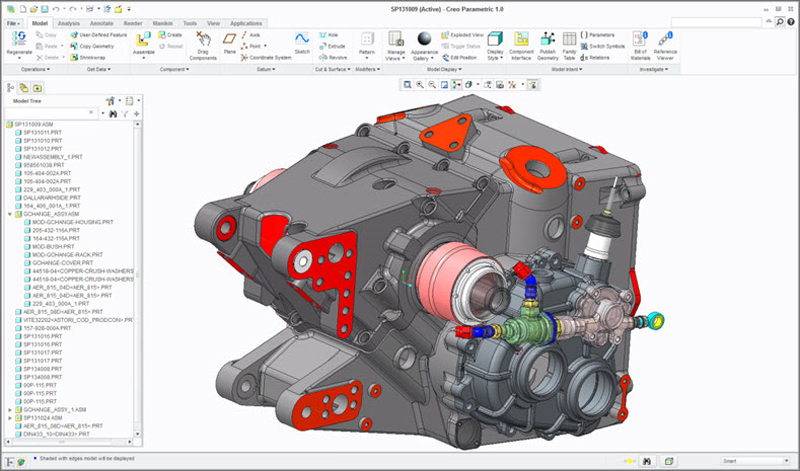
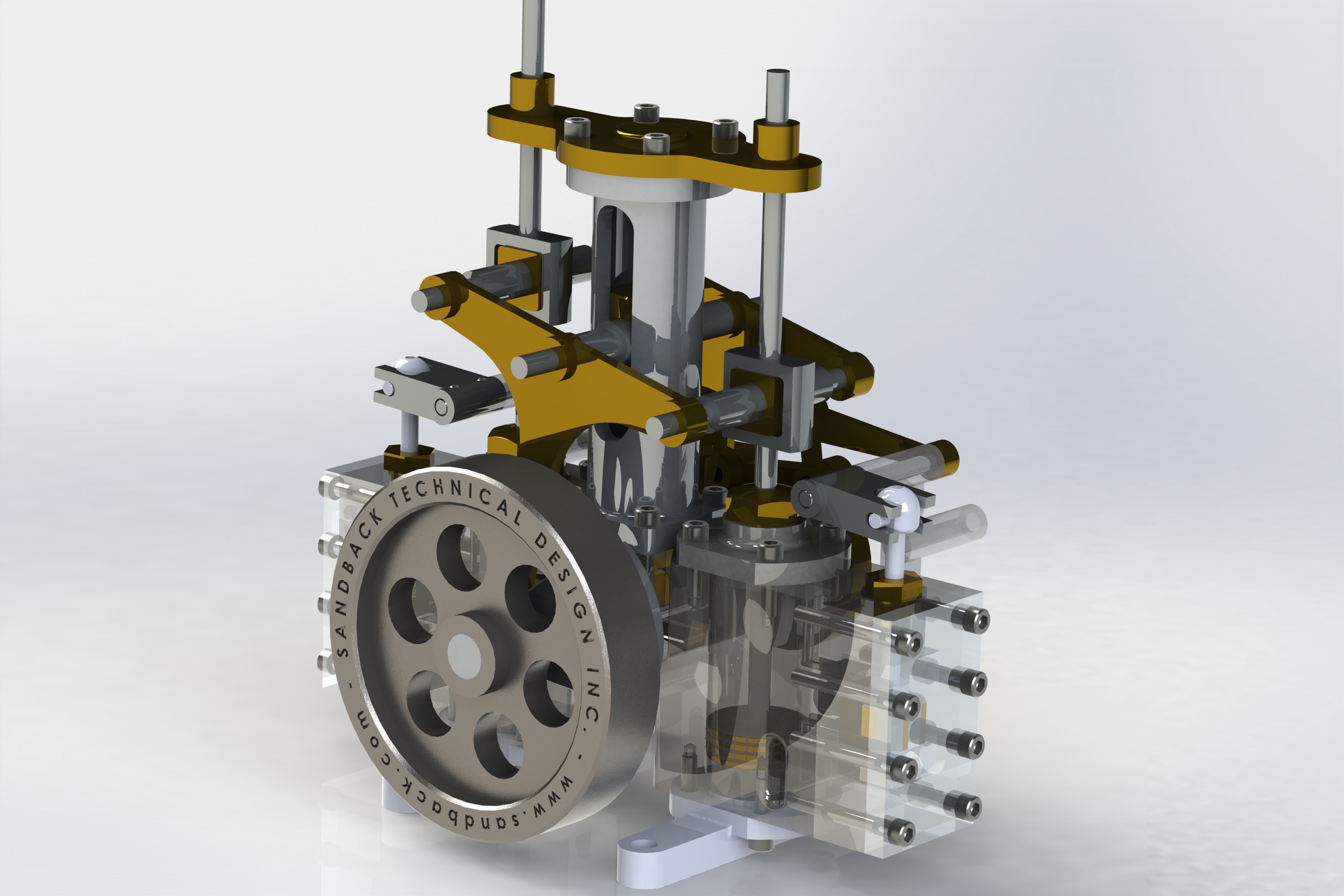
Design, quality, inspection and production engineers use these skills constantly, and the course pairs well with a CAD course such as SolidWorks, Creo or CATIA.
and 1 more — see all courses
Students rate the course after they finish it — their ratings appear here.
GD&T (Geometric Dimensioning and Tolerancing) is a symbolic language on engineering drawings that defines the allowed variation in the form, orientation and location of part features, so design, manufacturing and inspection teams read the drawing the same way.
Mechanical, production and automobile engineering students, diploma holders, design and quality engineers, and draughtsmen can join. You should already understand basic engineering drawing and dimensioning.
This GD&T foundation course is 20 hours long. It covers all the main symbols, datums and modifiers with drawing-based exercises, giving you a solid base for daily use at work.
You can choose either: a CADD centre classroom or live online GD&T classes, where the trainer explains each symbol on real drawings shared on screen.
Yes. The GD&T certificate from CADD Training Centre is easy to check: a manufacturing or quality team can scan its QR code or type the code into the online verification page.
Yes. Design engineer, quality engineer, inspection engineer, CMM programmer and production engineer roles in automotive, aerospace and machine-building firms expect you to read and apply GD&T callouts.
MMC (maximum material condition) is the size where a feature has the most material, such as the smallest hole; LMC is the opposite. Applying them to a tolerance allows extra bonus tolerance as the feature departs from that size.
More questions? Ask our counsellor or read the general FAQ.